
Find the Contamination Before It Finds Your Product
Pathogens don't live in your product — they live in your facility. An Environmental Monitoring Program (EMP) is the only way to find and eliminate harboring sites before they cause a recall, an FDA 483, or a consumer illness.
The FDA Expects It. Your Liability Exposure Requires It.
FSMA's Preventive Controls for Human Food rule requires that food manufacturers operating RTE environments implement and maintain an Environmental Monitoring Program for Listeria. This isn't optional — it's a documented regulatory expectation that FDA inspectors specifically look for during inspections.
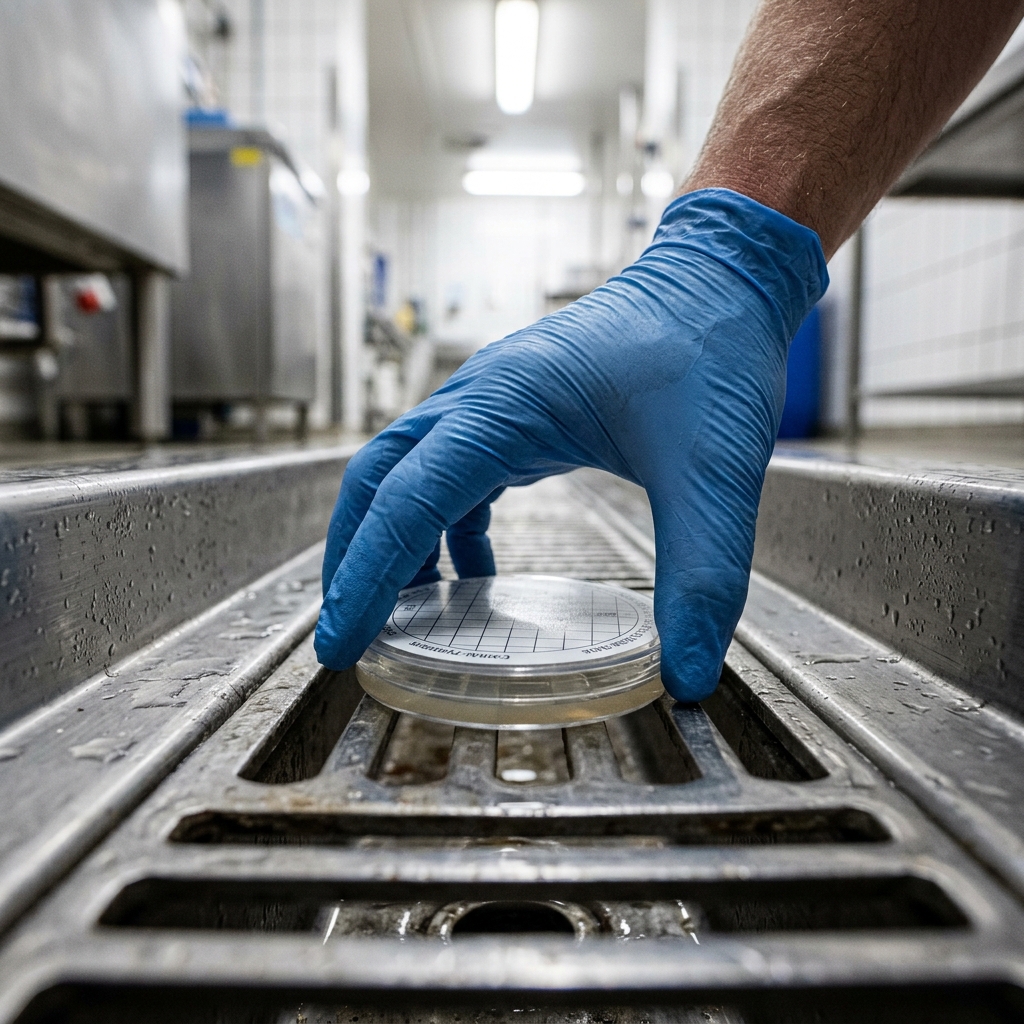
But beyond compliance, an effective EMP is your most powerful early detection tool. Pathogens like Listeria establish harborage sites — floor drains, equipment crevices, wet areas, condensation points — months before they migrate to food contact surfaces or finished products.
An EMP finds those sites. Corrective action eliminates them. And trending data proves your sanitation program is working over time.
Who Is Required to Have an EMP:
- RTE food manufacturers
- Deli & prepared food facilities
- Meat & poultry processors
- Dairy processors
- Fresh produce packers
- Beverage manufacturers
Everything Your Program Needs
EMP Program Design
We work with your QA team to design a sampling plan that meets FSMA requirements and is calibrated to your facility layout, production schedule, and risk profile.
Routine Swab Analysis
Same-day results for Listeria spp. and monocytogenes speciation. Swab results delivered within 24 hours of sample receipt — faster during enhanced testing events.
Trend Analysis & Heat Mapping
We track your results over time and identify patterns — recurring positive sites, seasonal trends, sanitation gaps — and present findings in a clear facility heat map.
Corrective Action Guidance
When a positive occurs, we help you understand what it means and what to do. Our scientists are available to walk through corrective action, root cause investigation, and intensified testing.
FSMA Documentation Package
Full documentation of your EMP results, corrective actions, and trend data — formatted for FDA inspections and third-party audits (SQF, GFSI, BRC).
Air Sampling
Supplemental air sampling for facilities with elevated airborne contamination risk, including cold-mist processing and high-humidity environments.
Understanding Zone 1–4 Environmental Testing
FDA's EMP guidance divides facility areas into four zones based on proximity to product and food contact surfaces. Your testing frequency and corrective action thresholds depend on which zone a positive occurs in.
Food Contact Surfaces
The highest-risk zone — direct contact with food product. Includes conveyor belts, cutting boards, slicers, packaging equipment surfaces. A positive here triggers immediate corrective action and intensified testing.
Non-Food Contact Surfaces Adjacent to Zone 1
Equipment frames, external equipment surfaces, table legs, and structures immediately adjacent to food contact surfaces. A positive here indicates Zone 1 exposure risk.
Other Non-Food Contact Surfaces
Areas farther from product — walls, floors, drains, door handles, equipment bases. High-value harboring sites for Listeria that can migrate toward Zone 1 over time.
Facility Areas Outside the Production Environment
Hallways, break rooms, locker rooms, loading docks, and entries. Less risk to product but can serve as entry points for contamination brought in from outside.
Getting Your EMP Program Running
Facility Assessment
We review your facility layout, product types, and current sanitation practices to design a sampling plan tailored to your risk profile.
Sampling Protocol Delivered
You receive a complete written sampling plan — sites, frequencies, collection instructions, and chain-of-custody forms.
Ongoing Sample Analysis
Submit swabs on your schedule. Results are delivered same-day for Listeria screens. Trend data builds over each sampling event.
Quarterly Trend Reviews
We present your cumulative EMP data, identify any patterns, and recommend program adjustments as your facility changes.